
Peppermint is everywhere: in toothpaste, chewing gum, tea, soaps, balms and perfumes. This guide explains what the oil is, how it has traditionally been used, and what to check when you buy it.
What peppermint oil is
Peppermint (Mentha × piperita) is a natural hybrid of spearmint (Mentha spicata) and watermint (Mentha aquatica). Its essential oil is steam-distilled from the leafy plant. The main components are menthol (typically 35–50%), menthone, menthyl acetate and 1,8-cineole, which together give the familiar fresh, sweet and cooling profile. How peppermint differs from cornmint and spearmint.
In traditional use
In Ayurveda, peppermint is valued for its sheetal guna, its cooling nature. Traditional practice uses it to calm excess heat (pitta), as a pungent aroma for clearing the head, as a carminative after meals, and in hair and scalp oils, where it is mixed with a carrier oil to cool a dry or itchy scalp. Similar uses appear in many other herbal traditions.
Where it is used today
| Industry | Typical uses |
|---|---|
| Oral care | Toothpaste, mouthwash, breath fresheners |
| Confectionery | Chewing gum, mints, chocolate fillings |
| Food and beverage | Teas, liqueurs, flavoured syrups |
| Personal care | Hair oils and shampoos, soaps, cooling lotions |
| Healthcare | Balms, rubs and inhalants, alongside menthol |
| Aromatherapy and perfumery | Fresh, green and herbal top notes |
Natural or synthetic “mint”?
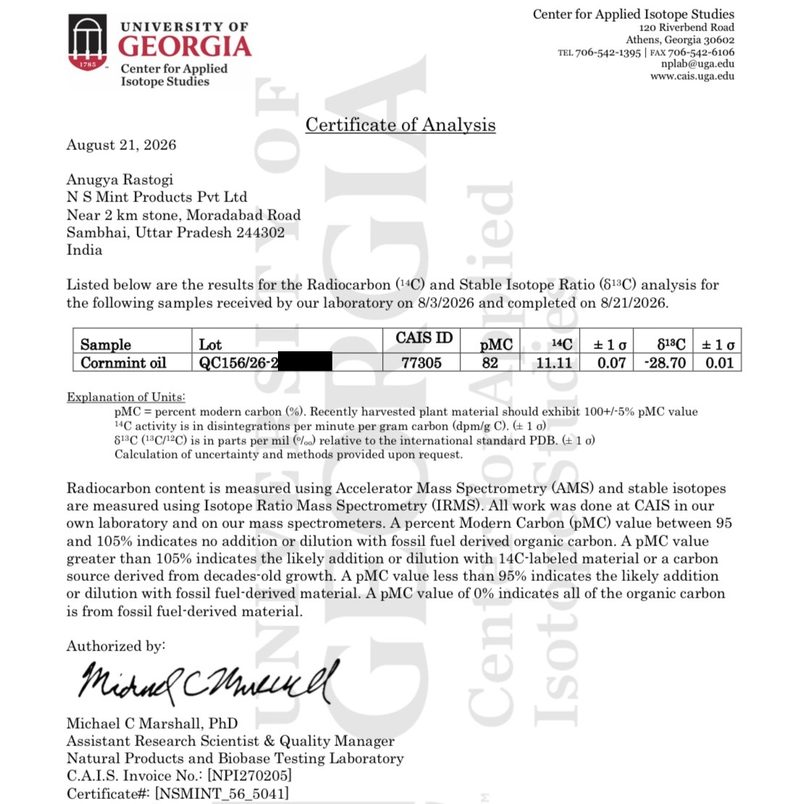
Much of the “mint” in consumer products today is not from the plant at all but synthetic menthol, often hidden behind a general “flavour” or “fragrance” declaration. If your brand or your customers expect natural, specify natural peppermint oil or natural L-menthol and ask your supplier for proof of origin. N S Mint radiocarbon (C-14) tests every incoming lot of raw material at the University of Georgia, USA. How to tell natural from synthetic menthol.
A note on product claims
Peppermint is the subject of a large body of research, and traditional uses are well documented. But health or therapeutic claims on a finished product are regulated in almost every market, by the FDA in the United States, under EU food, cosmetic and medicinal law in Europe, and by FSSAI and the AYUSH ministry in India. The brand owner must substantiate any claim for its own formulation. As an ingredient supplier we provide the specification, COA and regulatory documents your dossier needs.
N S Mint supplies natural Mentha piperita oil, peppermint oil ex arvensis built from natural fractions, and the full range of natural menthol and mint oils. Peppermint oil specification.