
Global menthol demand is met by two very different supply chains. Natural menthol is crystallised from the oil of Mentha arvensis, grown mainly in India. Synthetic menthol is built from petrochemical or other feedstocks in chemical plants. Both can meet a pharmacopoeia monograph, but they are not interchangeable when a label, a customer or a regulation says “natural”.
How each is made
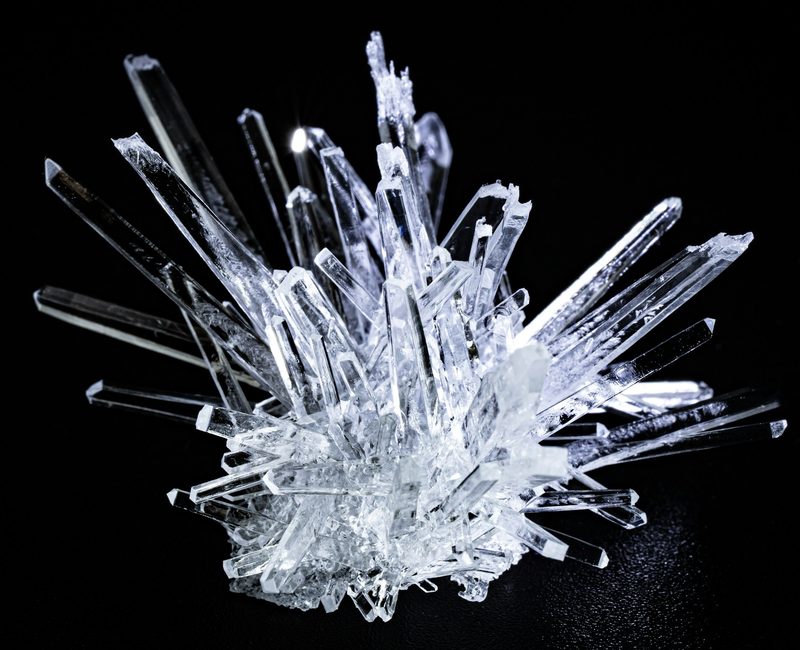
Natural. Farmers harvest cornmint and distil the leaves into mint oil that is 70–80% menthol. Chilling the oil makes L-menthol crystallise out; the crystals are separated, washed and dried. What remains is dementholised oil (DMO), itself a valuable flavour material. Read how we make natural menthol.
Synthetic. Large producers use several routes: one starts from m-cresol and thymol and resolves the racemic mixture into the L-isomer; others build L-menthol by asymmetric synthesis from myrcene or from citral. Some routes yield racemic DL-menthol rather than pure L-menthol.
Why the difference matters
- Natural flavouring claims. Under EU Regulation (EC) 1334/2008 and similar rules elsewhere, a “natural flavouring” must come from material of plant, animal or microbiological origin by appropriate physical, enzymatic or microbiological processes.
- Sensory profile. Natural menthol carries trace companions from the oil that some formulators prefer; racemic menthol cools less.
- Customer specifications. Many oral-care, confectionery and wellness brands specify natural origin.
Tests that prove natural origin
| Test | What it shows |
|---|---|
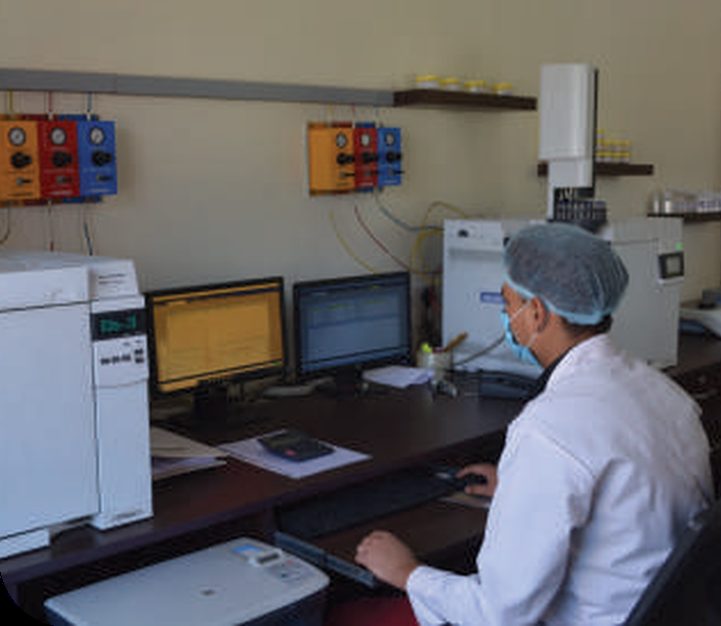
| Chiral gas chromatography | Ratio of (−) to (+) menthol. Racemic synthetic menthol contains about 50% (+)-menthol; natural menthol is essentially all (−) |
| Impurity profile by GC | Natural menthol carries characteristic traces of related mint compounds; synthetic routes leave different by-products |
| Radiocarbon (14C) content | Plant-derived carbon contains 14C; carbon from fossil feedstocks does not |
| Stable isotope ratios (δ13C, δ2H) | Distinguish plant sources from petrochemical routes |
No single test settles every case, because some synthetic routes make pure L-menthol. Laboratories therefore combine chiral GC and impurity profiling with isotope methods when origin is disputed.
Reading the label
In many markets a product can say “flavour” or “fragrance” without saying whether the menthol behind it came from mint or from a chemical plant. So some products marketed as natural, or even as herbal or Ayurvedic, contain synthetic menthol, and the buyer cannot tell. Mandatory declaration of synthetic ingredients has been proposed in India and elsewhere; until it exists, the practical safeguard is in the specification. If natural origin matters to your brand, write “natural” into your purchase specification and ask your supplier for evidence: a C-14 result, chiral GC data, or both.
What N S Mint does
Every lot of raw material we buy is C-14 (radiocarbon) tested at the University of Georgia, USA, before it enters production, and lots that fail are rejected. We handle no synthetic menthol in our plant. On request we can support third-party origin testing for your audit. Talk to our QC team.