
All three are traded as “mint oil”, and all three grow in the mint belt of western Uttar Pradesh around our plant. But they are different species, they look different in the field, and they behave very differently in a formula.
In the field
Walk through the mint belt in summer and the fields look like one green expanse. Up close, the three crops are easy to tell apart.
- Cornmint (Mentha arvensis) is the workhorse of the industry: oval, greyish-green leaves with rounded edges, and a sharp, piercing, intensely cooling scent. Its menthol content is the highest of the three.
- Peppermint (Mentha piperita) has pointed, darker leaves and often a faint purple hue on the stem. Its aroma is softer than cornmint, sweet but still fresh and well balanced.
- Spearmint (Mentha spicata) has bright green, spear-shaped leaves. It contains almost no menthol; its character comes from L-carvone, which gives a sweet, warm, subtly floral mint that most people recognise from chewing gum.
Side by side
| Cornmint (M. arvensis) | Peppermint (M. piperita) | Spearmint (M. spicata) | |
|---|---|---|---|
| Main growing region | India, especially Uttar Pradesh | United States (Pacific Northwest), India and others | India, United States, China |
| Key component | Menthol, typically 70–80% (crude) | Menthol, typically 35–50%, with menthone and menthyl acetate | L-carvone; very little menthol |
| Character | Strong, sharp, cooling | Rounder, sweeter, balanced | Sweet, mild, warm |
| Main use | Natural menthol production, DMO, oral care | Premium gum, toothpaste, confectionery, liqueurs | Chewing gum, toothpaste, confectionery |
| HS code | 3301 25 | 3301 24 | 3301 25 |
From field to oil
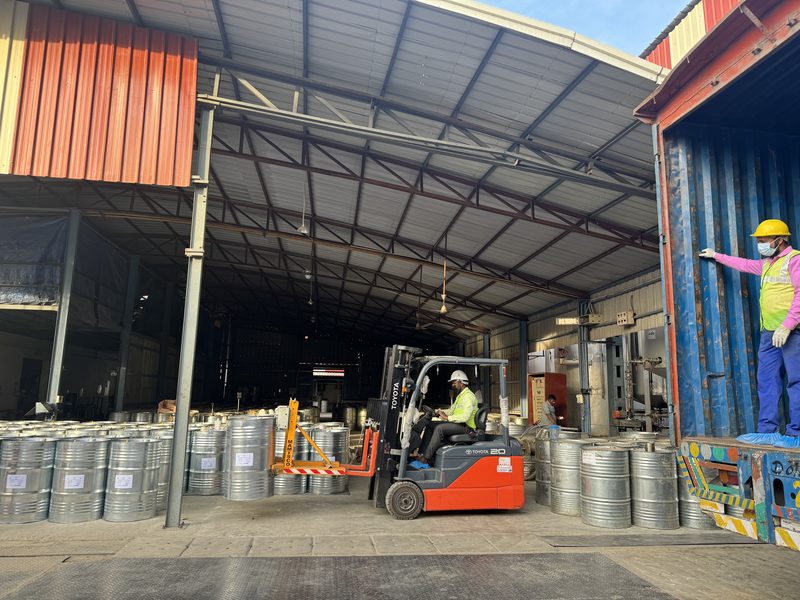
All three are harvested by hand or tractor, left to wilt overnight, and steam-distilled in small units in or near the fields. Steam carries the oil out of the leaves, the oil separates from the condensed water, and the spent plant material is dried and burned as fuel for the next batch. Our team visits these units every season to meet the farmers and distillers who form the first link in our supply chain. How natural menthol is made.
Where dementholised oil fits
When menthol is frozen out of cornmint oil, the remainder is dementholised oil (DMO). Its menthol content is lower and its profile is closer to peppermint, so many flavourists use DMO, alone or blended, to replace part of the peppermint in toothpaste and chewing gum.
Peppermint ex arvensis
Peppermint oil ex arvensis is built from natural Mentha arvensis fractions to match a peppermint profile. Because India’s arvensis crop is much larger than the world’s piperita crop, it can offer steadier pricing.
Choosing
- Need natural menthol or maximum cooling: cornmint oil or L-menthol.
- Need true peppermint character for a premium product: Mentha piperita oil.
- Need peppermint-like flavour at lower cost: DMO or peppermint ex arvensis, often blended.
- Need the sweet chewing-gum mint: spearmint oil, natural or rectified, or carvone-standardised to your specification.
Each mint has its role, from toothpaste and chewing gum to pain balms and perfumes, and that variety is what gives formulators room to work. N S Mint supplies all of them. Compare mint oils.