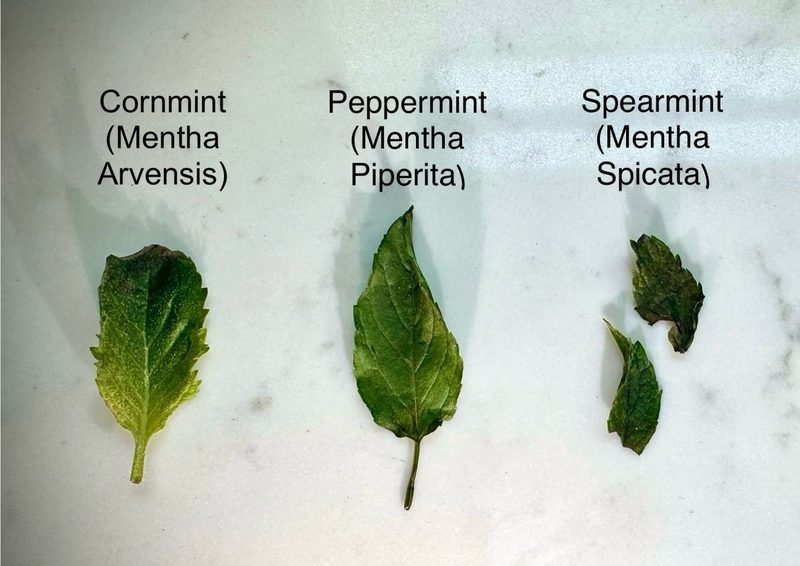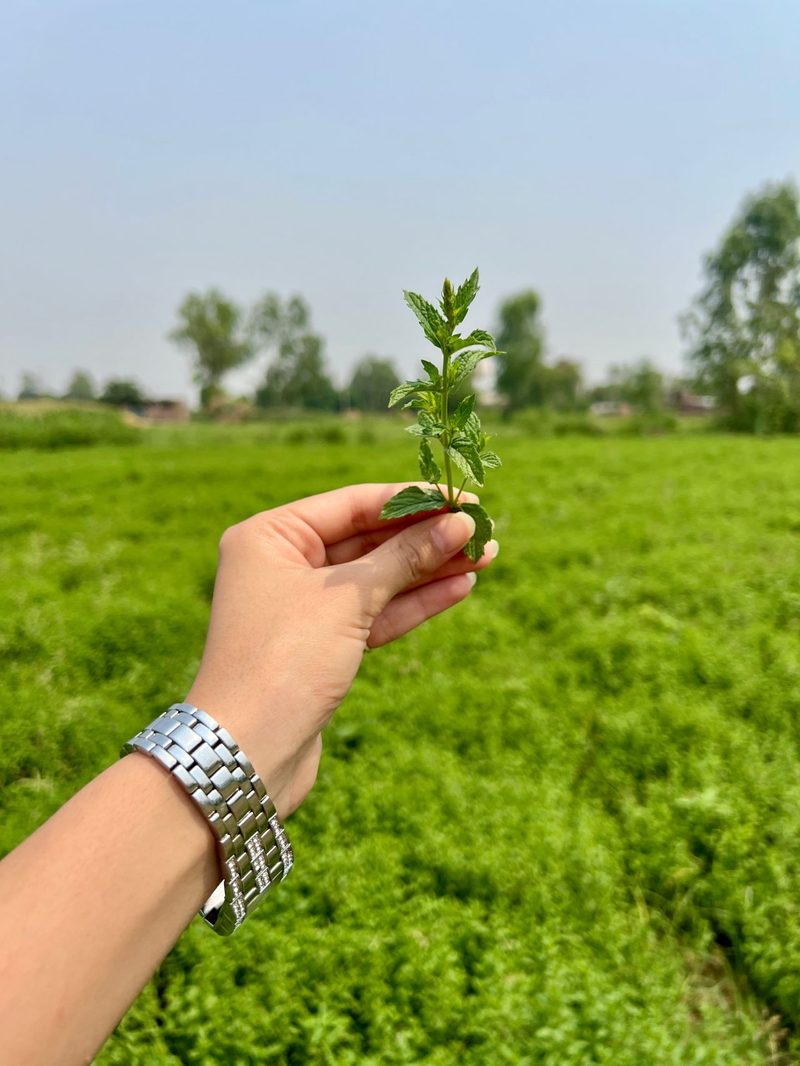

Peppermint oil sells at a premium over cornmint oil, and natural menthol at a premium over synthetic. That price gap is what drives adulteration. A study of commercial peppermint oils published in 2023 found that more than half failed the relevant ISO specification. Here is how buyers and labs catch the problem.
Common forms of adulteration
- Cornmint or DMO in peppermint oil. Cheaper Mentha arvensis oil, or dementholised oil (DMO), blended into Mentha piperita oil.
- Synthetic menthol added to raise the menthol content of a mint oil, or blended into “natural” menthol crystals.
- Racemic menthol, which changes the isomer balance.
- Solvents or cheaper oils added to stretch volume.
Step 1: the GC profile against the standard
Gas chromatography (GC) compares the oil’s main constituents with the ranges in the standard. For peppermint oil, the profile reproduced from ISO 856 gives:
| Constituent | Peppermint oil (non-US) | Peppermint oil (US) |
|---|---|---|
| Menthol | 32–49% | 36–46% |
| Menthone | 13–28% | 15–25% |
| Isomenthone | 2–8% | 2–4.5% |
| Menthyl acetate | 2–8% | 3–6.5% |
| 1,8-cineole | 3.0–8.0% | 4.0–6.0% |
| Limonene | 1.0–3.0% | 1.0–2.5% |
| Menthofuran | 1–8% | 1.5–6% |
| Pulegone | 0.5–3.0% | 0.5–2.5% |
Step 2: the ratios that expose cornmint
Cornmint and peppermint oils share many constituents, but in different proportions. The European Pharmacopoeia uses these markers:
- Cineole-to-limonene ratio. At least 2 in peppermint oil; below 1 in dementholised Mentha arvensis oil.
- Isopulegol. At most 0.2% in peppermint oil; 1.0–3.0% in dementholised arvensis oil.
- Menthofuran. 1–9% in peppermint oil; typically low in arvensis oil.
- Menthone to isomenthone. A useful indicator of authenticity in published studies.
An oil that passes the ISO ranges can still fail these ratio checks, so ask your lab to report them.
Step 3: chiral analysis
Each constituent exists as mirror-image forms, and in genuine peppermint oil their proportions vary within a narrow range whatever the origin. A chiral GC column separates them, so a shifted ratio points to added synthetic or racemic material. Published studies have flagged oils that met ISO limits but failed chiral checks.
Step 4: isotopes and C-14
- Stable isotopes (δ13C and δ2H) measured by GC-IRMS can separate natural from synthetic menthol, especially when carbon and hydrogen are plotted together. Results also vary with climate and growing practice, so labs need good reference data.
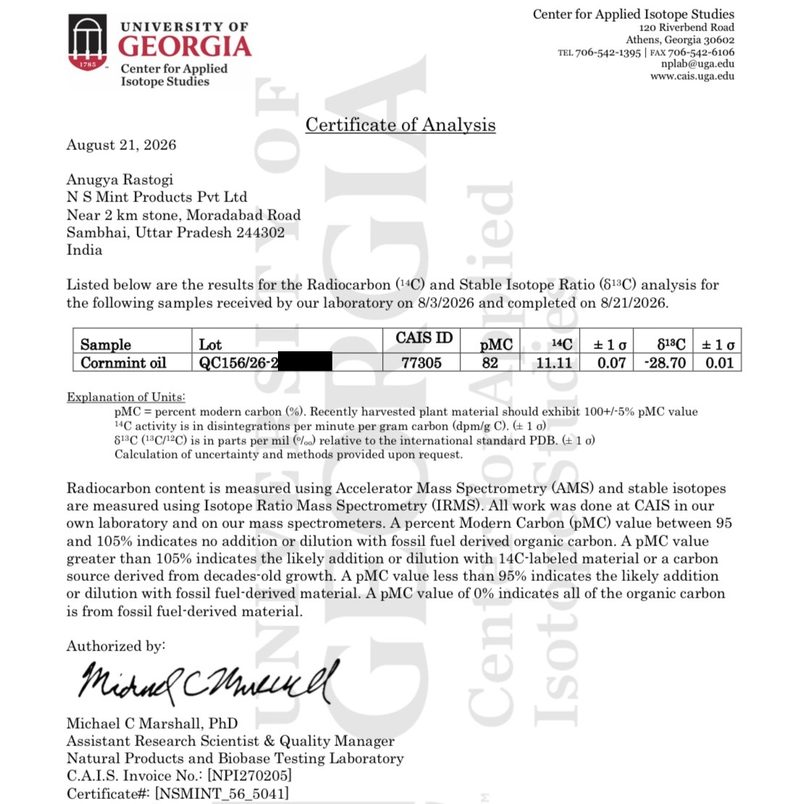
- C-14 radiocarbon shows whether carbon comes from living plants or from petroleum. Plant material reads close to 100% modern carbon; fossil-derived material reads zero; blends fall in between. It cannot tell one plant source from another, so it will not catch cornmint in peppermint. C-14 testing explained.
What a buyer can do
- Specify the standard (ISO, pharmacopoeia or your own) and the ratios you need on the COA.
- Ask for the GC chromatogram, not just a summary.
- For natural claims, ask for a C-14 certificate for the lot.
- Buy from producers who control the supply chain from the farm.
Every batch of raw material we procure is C-14 tested at the University of Georgia, USA, and every lot is tested again in our own laboratories. Our proof of purity.
Sources: ISO 856 profile as reproduced in the Cosmetic Ingredient Review report (2017); European Pharmacopoeia monographs 0405 and 1838; Wang et al., J Chromatogr B (2023); del Castillo et al. (2004); Thermo Fisher GC-IRMS application note; Chanotiya et al., CSIR-CIMAP (2024).