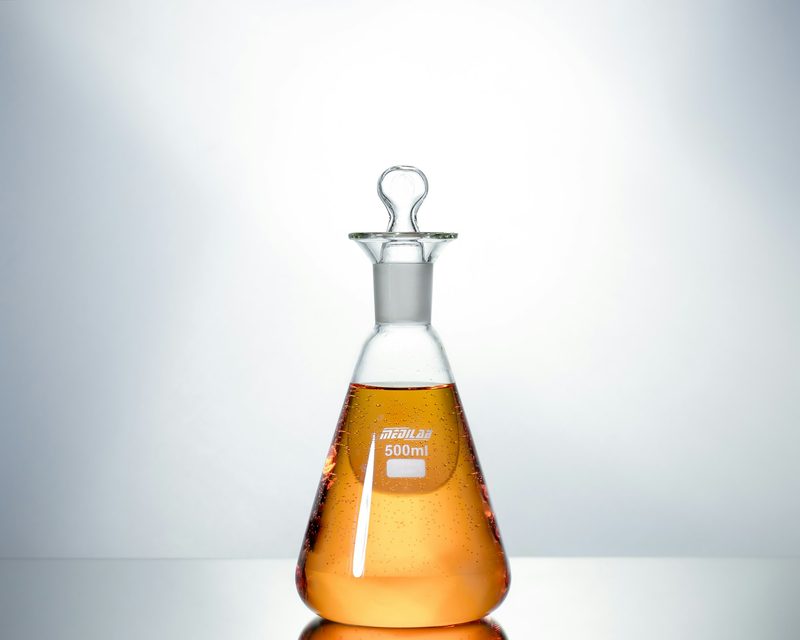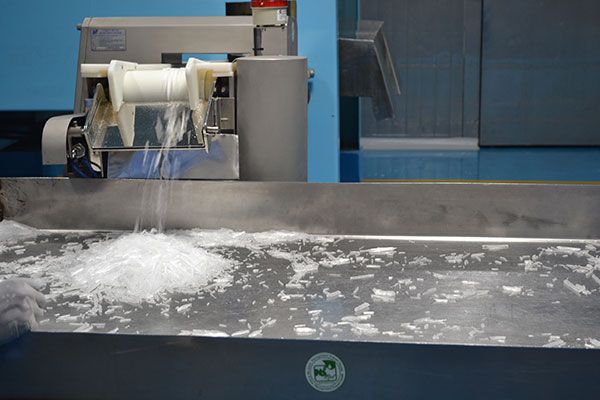

Dementholised oil (DMO) is Mentha arvensis oil from which part of the menthol has been removed by freezing. It is a co-product of natural menthol manufacture and one of the most widely traded mint flavour materials.
Composition
Crude cornmint oil contains about 70–80% menthol. After crystallisation, DMO typically contains around 30–45% menthol, with menthone, isomenthone, menthyl acetate, limonene, pinenes and other natural constituents making up the rest. Exact values depend on how much menthol was frozen out and on the crop.
Grades
- DMO with terpenes: the oil as it comes off crystallisation, sometimes redistilled.
- DMO terpeneless: the light terpene fraction is distilled off, improving solubility and stability and giving a cleaner mint note.
- Rectified DMO: redistilled to a tighter specification.
Uses
DMO gives a strong, fresh mint flavour at a lower cost than peppermint oil, so it is used in toothpaste, mouthwash, chewing gum and candy, often blended with Mentha piperita oil. It is also used in balms and household products.
Identifiers
DMO is traded under CAS 68917-18-0 (Mentha arvensis oil), HS 3301 25, and as a flavour falls under FEMA 4219 (cornmint oil). See DMO specifications.