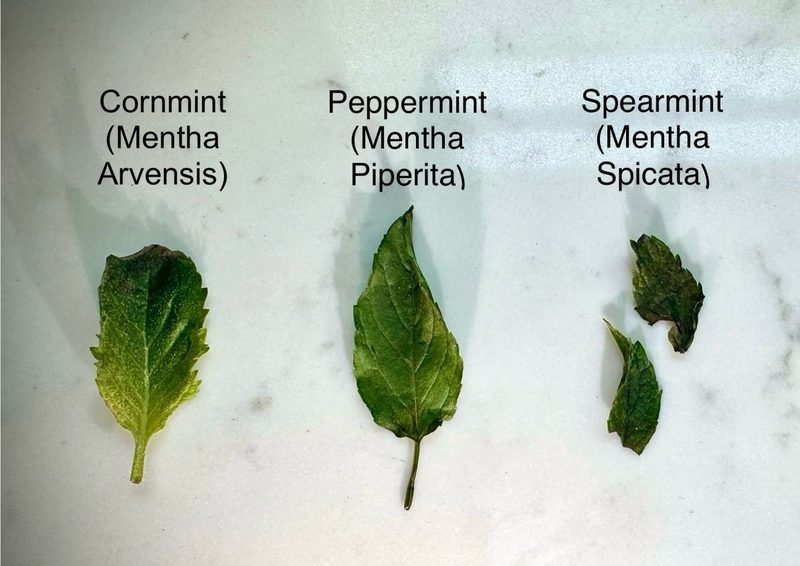

Spearmint gives chewing gum and toothpaste their sweet, gentle mint note. Its character comes not from menthol but from L-carvone, which makes up most of the oil. Knowing the types of spearmint oil, and how carvone content is specified, helps you buy the right grade.
Types of spearmint oil
| Type | Botanical source | Where grown | Notes |
|---|---|---|---|
| Native spearmint | Mentha spicata | United States, India, others | The classic spearmint profile |
| Scotch spearmint | Mentha × gracilis | United States, Canada | Slightly higher limonene |
| Chinese type | Mentha viridis var. crispa | China | Often redistilled to 60% or 80% carvone |
| Indian type, redistilled | Mentha spicata | India | Redistilled to the buyer’s specification |
The international standard ISO 3033 has four parts covering these types.
What the standard specifies
| Native (ISO 3033-1) | Scotch (ISO 3033-4) | |
|---|---|---|
| Carvone | 60.0–70.0% | 60.0–70.0% |
| Limonene | 9–15% | 11.5–16.5% |
| Menthone | ≤0.2% | ≤0.15% |
| Optical rotation | −59° to −48° | −59° to −48° |
| Relative density (20 °C) | 0.921–0.938 | 0.921–0.938 |
The standard describes the odour as the characteristic odour of carvone with a herbaceous note, and notes that the carvone is predominantly L-carvone.
Carvone-standardised oils
Spearmint oil can be redistilled to raise or fix the carvone content. ISO 3033-2 covers Chinese-type oils at 80% carvone (78.0–84.0%) and 60% carvone (57.0–66.0%). Standardised oils give flavourists a consistent strength from lot to lot, which matters in large-volume gum and toothpaste production.
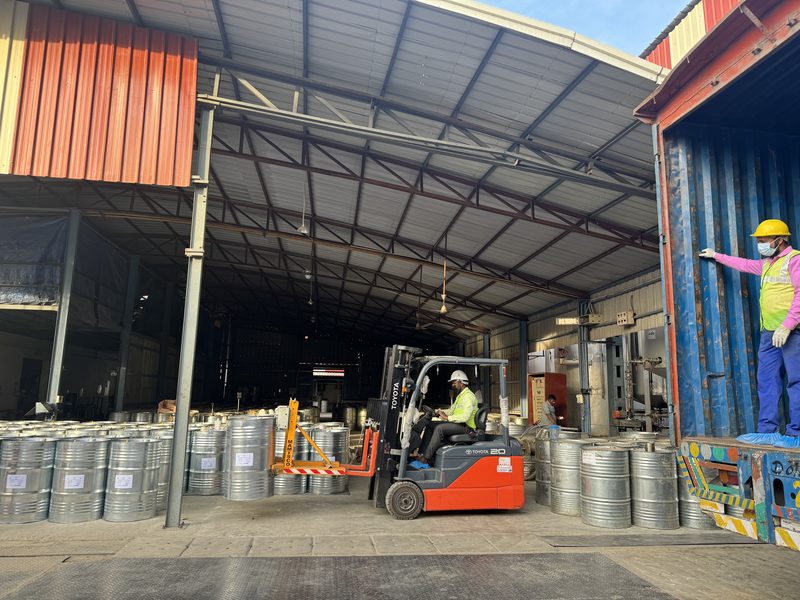
We supply spearmint oil natural or rectified, and carvone-standardised to your specification. Spearmint Oil.
L-carvone vs D-carvone
Carvone exists as two mirror-image forms with very different smells:
- L-carvone, (R)-(−)-carvone, CAS 6485-40-1, FEMA 2249: the sweet, minty smell of spearmint.
- D-carvone, (S)-(+)-carvone, CAS 2244-16-8: the spicy smell of caraway.
The difference is a classic example of how the nose tells mirror-image molecules apart. When you buy natural L-carvone, check the optical rotation on the COA to confirm the isomer. L-Carvone.
Where spearmint is used
The two big uses are chewing gum and toothpaste, followed by confectionery, mouthwash, beverages and pharmaceutical flavours. In fragrance, carvone-containing oils fall under the IFRA carvone standard, which sets limits by product type.
Buying checklist
- Which type and origin do you need: native, Scotch, Chinese or Indian?
- What carvone range: natural (about 60–70%) or standardised (for example 80%)?
- Limonene and menthone limits for your flavour profile.
- COA with GC profile and optical rotation for each lot.
Sources: ISO 3033-1, -2 and -4:2005; PubChem; Friedman & Miller, Science (1971).